The “Psychological Distance” Trick for Tough Decisions
A simple, science-backed way to think more clearly when things feel messy
This week’s Better You, Backed by Science is about a surprisingly simple trick for solving some of your problems.
Now, you might say, “A problem is a problem.”
But in reality, for many problems, it depends hugely on how you look at it.
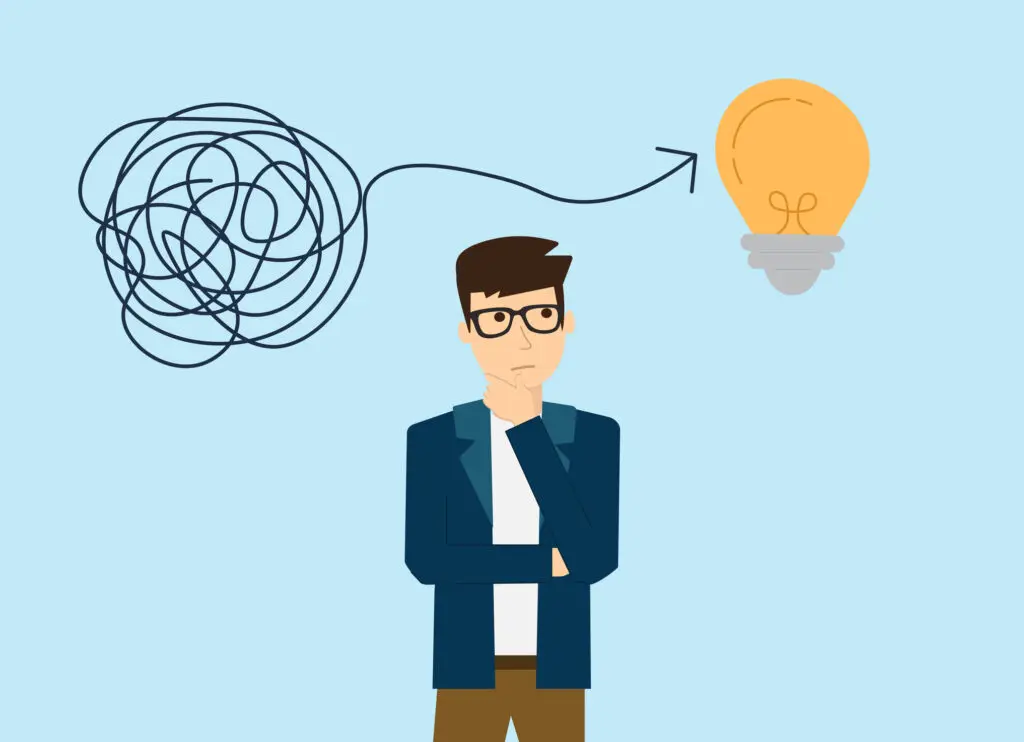
And science shows there’s a small mental shift you can make that often helps problems feel clearer, lighter, and easier to work with.
It’s called creating psychological distance.
The simple idea
When we’re right inside a problem, our emotions are right inside it too. That makes it harder to think clearly, see options, or feel calm enough to choose wisely.
But if you take a small mental step back, your brain switches into a more rational, less reactive mode.
One of the easiest ways to do that is this:
Imagine you’re giving advice to someone else with your exact problem.
Instead of asking:
“What should I do about this?”
Ask:
“If a good friend came to me with this exact situation, what would I advise them to do?”
That tiny shift creates psychological distance — and it changes how your brain processes the situation.
A few everyday examples
Example 1 – A work dilemma
You’re stuck over whether to say yes to an extra commitment that might overload you.
Instead of wrestling internally, ask:
“If my friend were in this situation, would I tell them to protect their energy… or push themselves harder?”
Example 2 – A relationship issue
You’re upset about something someone said and can’t decide whether to raise it or let it go.
Reframe it as:
“If someone I cared about told me this story, what would I gently suggest they do?”
Example 3 – A confidence wobble
You’re doubting yourself about an opportunity.
Ask:
“If my friend had this chance and felt this unsure, would I encourage them to go for it?”
Most people are kinder, wiser, and more balanced when advising others than when advising themselves.
Here’s the science bit
Researchers have found that when people view their own problems from a third-person perspective, a few helpful things happen:
- Emotional reactivity goes down
- Stress responses are lower
- Cognitive bias is reduced
- Decision quality improves
In one line:
Distance = clearer thinking.
Your brain shifts from an emotionally charged, threat-focused mode into a calmer, problem-solving mode.
It’s the same reason you can often give brilliant advice to a friend…
…yet struggle to follow your own.
Try this today (2–5 minutes)
Pick one current issue — big or small.
- Write a short description of the problem as if it belongs to someone else.
- Ask: “What would I genuinely advise this person to do?”
- Write your answer in a calm, supportive tone.
- Then read it back and apply it to yourself.
You’re not distancing yourself from your life.
You’re giving your brain just enough space to think wisely instead of reactively.
You don’t have to solve everything perfectly.
But when things feel tangled or emotionally loaded, this little mental trick can bring surprising clarity.
Sometimes the best wisdom you need…
…is already inside you – just waiting for a bit of space to be heard.
Want to go deeper?
🎥 Watch my YouTube video where I talk a bit more about this – and how and why it works.
References (if you’re curious)
Here’s a link to some research.
More
Want to read more like this? Subscribe to my free Better You, Backed by Science weekly email (sends every Wednesday).