
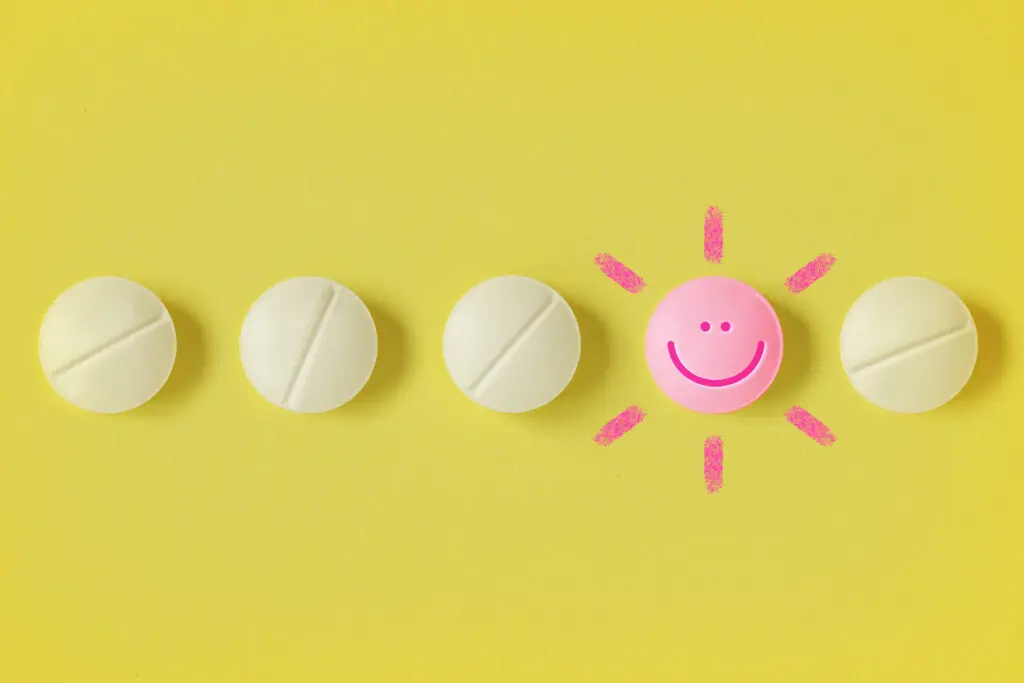
How to harness the power of the placebo
This week’s Better You, Backed by Science is about how you can tap into and harness the placebo effect.
Belief shifts biology.
It’s something that science has uncovered as a fact over the past few years.
The placebo effect was once dismissed as the ‘natural course of the condition’. It meant that if a person’s condition improved when they took a placebo, it was just coincidence.
It was always going to improve. It just so happened that it coincided with them taking a placebo.
OK, to be fair, that will occur sometimes. It’s life.
But we understand the placebo effect much better nowadays.
When a person takes a placebo, their expectation of what is supposed to happen prompts the brain to use its natural resources to meet that expectation.
For example, if a person took a placebo for back pain, but they believed it was a real painkiller, their pain would still reduce.
Why?
They had an expectation of what the tablet would do. Their brain then used its available resources to meet that expectation.
What are its available resources?
First up: its own natural version of morphine – endogenous opioids.
It releases these into the region of the brain associated with the location of the pain.
Result: pain goes away.
Not because it was a coincidence. But because of endogenous opioids. A response to their expectation.
How do expectation and belief work together?
Expectation arises out of belief.
The person believed in the painkiller or in a doctor who suggested they take it. That resulted in an expectation that it will take their pain away.
The flow is this:
Belief → expectation → chemistry → result.
This is the basis of the placebo effect.
→ It’s also why taking two placebos is usually better than one.
→ It’s why larger placebo tablets usually work better than smaller ones.
→ It’s why more expensive placebos are better than cheaper ones.
We believe that more is better, so we expect more. The brain says, “OK then” and releases more of its natural resources to meet these greater expectations.
Try This: How to tap into the placebo effect
There are several ways you can tap into the placebo effect. It’s part of the broader mind-body connection. Here’s a few:
1) Learn some science of the mind-body connection: Like you’re doing here. The more we understand, the more we believe in the mind-body connection, which causes us to expect things to happen when we use our minds. And this produces better results.
2) Notice how your body responds to your mind: Vividly imagine biting into a lemon or even an orange – notice if you salivate. Notice how your body tenses when you anticipate something stressful. Notice how your body relaxes when you feel good.
When you pay attention to how your body responds to mental states, it helps strengthen expectations of results when you create an intentional mental state.
3) Visualise to build belief and expectation: Start small. Do a stretch as far as you can. Then relax. Now visualise being able to stretch further. Imagine your muscles are really supple. Now try the stretch again. Notice that you went further. This helps you believe that your mind can impact your body through visualisation and expect results when you visualise.
4) Visualise wellness: The brain doesn’t necessarily distinguish real from imaginary. When we imagine ourselves well, if we’re sick or injured, this can help the brain activate a state that moves the body in that direction. It’s known as ‘remembered wellness’.
Want to go deeper?
🎥 Watch my YouTube video where I share more examples of the placebo effect and how to use it. You can watch below.
References (if you’re curious)
Expectation prompts the brain. Link here.
A study showing that 4 placebos was more effective in treating duodenal ulcers than 2 placebos (44% vs 36%). Link here.
More expensive placebos work better than cheaper ones. Link here.
More
Want to read more like this? Subscribe to my free Better You, Backed by Science weekly email (sends every Wednesday).