
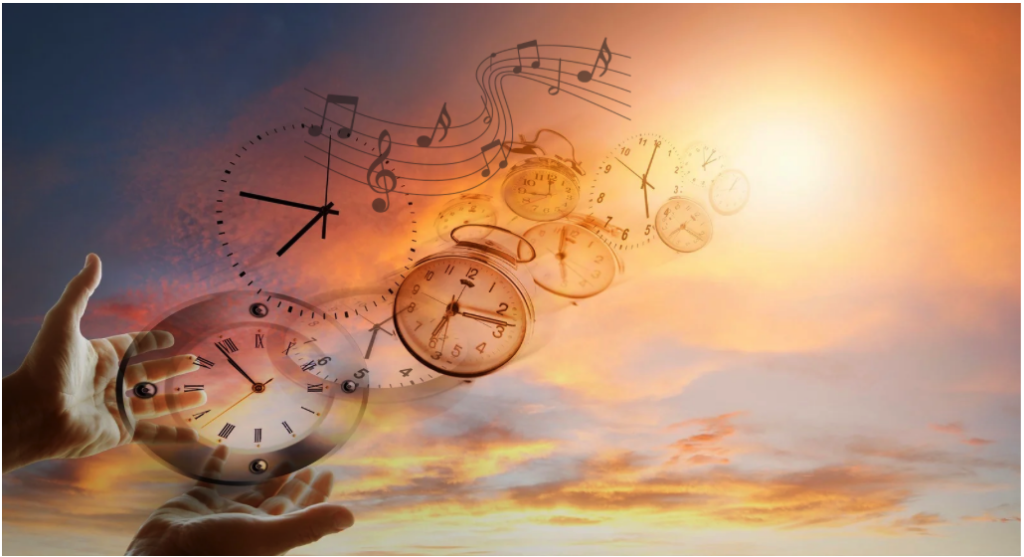
A Song, A Memory, and a Surprising Piece of Neuroscience
This week’s Better You, Backed by Science is about music and memory.
If I asked you what the closest thing to time travel is, what would you say?
A wormhole?
A quantum physics experiment?
A DeLorean from Back to the Future? 😉 (I love that movie)
As fascinating as those ideas are, the closest thing to time travel might actually be sitting in your Apple or Spotify playlist.
Hear me out.
Have you ever heard a song you hadn’t listened to in years and suddenly found yourself transported back in time?
Not just remembering the past, but feeling it.
A song comes on and suddenly you’re back in your teenage bedroom.
Or driving your first car.
Or dancing at a wedding.
Or walking hand in hand with someone you loved.
For a few moments, it can feel as though time folds in on itself.
But this isn’t just nostalgia. It’s neuroscience.
Researchers have found that music is strongly connected to what’s known as autobiographical memory – that’s the memories that make up the story of our lives.
One reason is that music activates several brain regions simultaneously, including areas involved in emotion, memory, attention, and self-reflection.
This creates particularly rich memory traces.
It means that when you hear a song associated with a specific period of your life, your brain doesn’t simply retrieve information about that time. It can partially recreate the emotional state that accompanied it as well as where you were, what you were doing, and who you were with.
In a sense, the music acts as a key.
The memory was always there, but the song unlocks the door.
And what’s especially interesting is that songs from adolescence and early adulthood often have the strongest effect.
Psychologists sometimes refer to this as the reminiscence bump – our tendency to form especially vivid and enduring memories during our teens and twenties.
Maybe that’s why hearing a song from your youth can feel so powerful.
Because it’s more than just the song you’re hearing. You’re temporarily embodying a younger version of yourself.
The hopes you had.
The worries you carried.
The dreams you were chasing.
The person you were becoming.
And perhaps that’s one reason music matters so much.
It’s more than entertainment. It’s a library of who you’ve been. A collection of emotional bookmarks scattered throughout your life.
Try This
Find a song you loved around twenty or more years ago.
Put on some headphones.
Close your eyes.
And notice what returns.
Not just the memories.
The feelings.
The atmosphere.
The version of you that existed back then.
You might discover that the closest thing to time travel has been sitting in your music collection all along.
References (for those who wish to explore further)
Neuroscience of autobiographical memory: Janata, P. (2009). The neural architecture of music-evoked autobiographical memories. Cerebral Cortex, 19(11), 2579–2594. Link.
And a bit about the reminiscence bump: Jansari, A and Parkin, A. J. (1996). Things that go bump in your life: explaining the reminiscence bump in autobiographical memory. Psychology of Aging, 11(1), 85-91. Link.
And for a deep dive into all the ways that music impacts the brain, and even it’s effects with dementia and Parkinson’s patients, I’d recommend Daniel Levitan’s terrific book, ‘Music as Medicine’. Link
More
Want to read more like this? Subscribe to my free Better You, Backed by Science weekly email (sends every Wednesday).
Tags
What does the phrase “the closest thing to time travel” mean to you?