
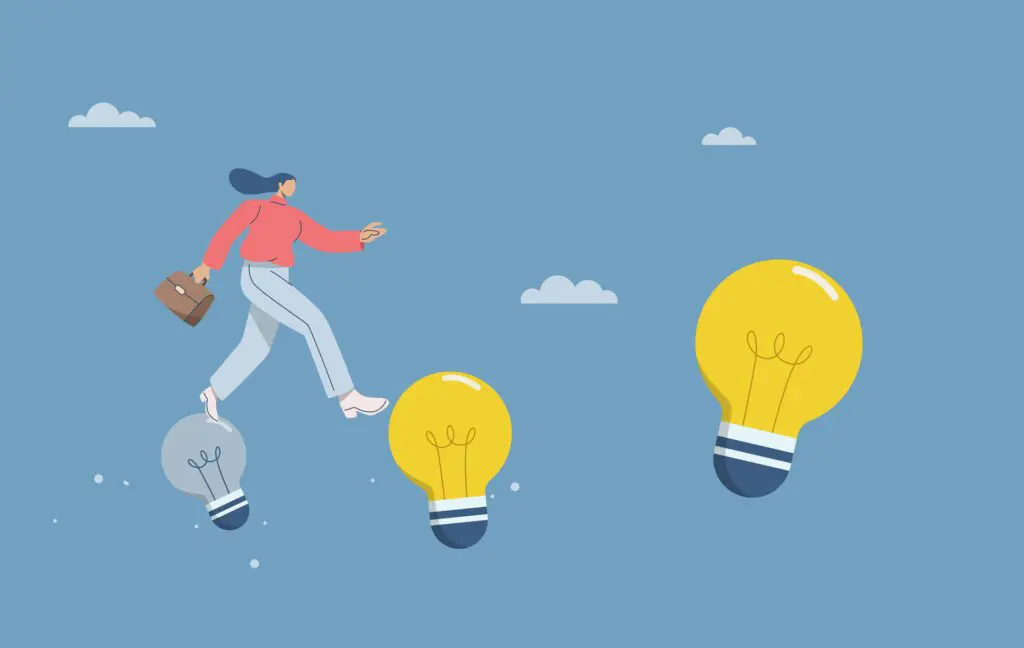
Your expectations are rewriting reality
This week’s Better You, Backed by Science is about expectations and how they shape what we experience.
Researchers once gave volunteers a cherry-flavoured drink but used food dye to colour it green.
More than a third of the volunteers couldn’t taste cherry and insisted it tasted a lemon-lime flavour.
How?
They expected it to taste like lemon-lime and that expectation overruled taste processing in the brain.
That’s how powerful expectation is. It shifts biology.
Here’s another example.
Suppose a person with low back pain takes a couple of painkillers. Except they’ve been secretly swapped for placebos. The pain still goes away.
Why?
The brain is always working to meet our expectations. To meet the specific expectation of pain relief, the brain released its own painkillers (known as endogenous opioids).
It’s how the placebo effect works.
Expect to perform
Effects of expectation don’t just stay in the brain, though. Expectation can also affect physical performance.
Researchers at the University of Turin told athletes (out of competition) that they had been given a performance enhancing supplement, but it was just a placebo.
Yet, their strength and endurance surpassed those not given the supplement.
The same is true about any kind of performance in the real world. Our expectations also shape our confidence, our relationships, even how we interact and achieve results in the world.
Shaping Outcomes
Expectations are like instructions to the brain. They help shape what happens next, not just in the brain – across all areas of our lives.
But they don’t necessarily guarantee outcomes.
They influence the way your brain and body prepare for those outcomes.
And that preparation can make a remarkable difference to how you think, feel and perform.
For example:
- Expecting a task to be difficult can make it difficult by increasing stress before you even begin.
- Expecting rejection can facilitate rejection by making you withdraw before anyone has rejected you.
- Expecting a treatment to help can help by activating biological processes that support healing.
- Expecting a conversation to go well can make it so by changing your tone of voice, body language and confidence.
In other words:
Expectations don’t necessarily control reality. They are the doorway through which we enter our experience of reality.
High Expectations
A common piece of guidance offered in the village I grew up in was to not get your hopes up. What those offering it meant was that it’s ok to have dreams and be hopeful, but don’t get overly attached to them.
Because life happens, and even the clearest intentions and best laid plans are not immune to it.
There’s a balance to be found.
Because expectations can motivate us, energise us, improve performance, and ultimately help us achieve our goals.
On the other hand, if there’s a gap between expectation and reality that’s too high, it can cause anxiety, stress, and disappointment.
Indeed, a 2016 study found that unmet expectations are a leading cause of feeling dissatisfied in life.
So what’s the answer?
Flexible Expectations
Do we cultivate high expectations to set ourselves up to achieve? Or do we keep our expectations low to so won’t be disappointed?
What I’ve found personally helpful is something in the middle: aim for the stars but also be OK with things not working out.
I think of it as clear sky thinking with a side order of realism.
I know that things don’t always work out the way we hope, but I’m ok with that because I acknowledge that life does happen and often in unpredictable ways. It means I’ll try anyway and trust that where I land will always be what’s best for me. Focus with a little bit of non-attachment.
And part of this is believing in yourself.
Because positive expectations aren’t about believing everything will go your way. They’re about believing that you’ll find your way whatever happens.
As writer, Charlie Wardle, once advised: take inspiration from the bird sitting on the branch. It isn’t afraid of the branch breaking because its trust isn’t in the branch. It’s in its ability to fly.
Believe in yourself.
Not just that you can achieve things you aim for, but that you are also the type of person who can adapt and adjust to things along the way (to life as it happens).
The takeaway is this:
-Cultivate positive expectations.
-Try not to be too attached to a specific result. Trust that things work out for your highest good.
-Believe in your own abilities – whatever they are – and trust that you can apply them in any situation.
-And be ok with a bit of rain even if you love the sun.
Because we may not always be able to choose what happens.
But we can choose what we expect of ourselves.
And that choice quietly influences how our brain, body and behaviour respond to life.
Try This
1) Expect one good thing today
Each morning, take a few seconds to ask yourself:
“What is one thing I’m looking forward to today?”
It can be as simple as a coffee, a walk, a conversation or a favourite meal.
Anticipation is a powerful way of creating positive expectations.
2) Add the word “yet”
If you catch yourself thinking:
“I can’t do this.”
Try:
“I can’t do this yet.”
That single word changes an expectation of failure into an expectation of growth.
Then see if you can extend it to, “I will learn to do this.”
3) Visualise the process, not just the outcome
Spend a minute imagining yourself taking the next step towards a goal.
Research suggests that visualising the process can be just as important as visualising success.
4) Notice your predictions
Throughout the day, pay attention to the assumptions you’re making.
Are you expecting criticism?
Rejection?
Failure?
Or are you expecting that you’ll learn, adapt and cope?
Try to question or reframe any negative expectations.
5) Ask a better question
Instead of:
“What if this goes wrong?”
Try:
“What if this goes better than I expect?”
References (for those who wish to explore further)
Cherry drink study. Link.
Performance enhancing placebos. Link.
How unmet expectations cause dissatisfaction. Link.
More
Want to read more like this? Subscribe to my free Better You, Backed by Science weekly email (sends every Wednesday).
Tags